Leading homegrown financial services company Singlife and NHG Health’s Centre for Healthcare Innovation (CHI) have recognised nine healthcare project teams at the first CHI-Singlife Awards 2026. The awards honour innovations that improve patient outcomes while advancing environmental and social sustainability. They were presented during CHI’s Celebration of People event.
The CHI-Singlife Awards is designed to encourage and celebrate innovation led by care teams that improve patient outcomes while advancing environmental and social sustainability. The awards spotlight practical, scalable solutions developed through the CHI Academies’ capability-building programmes, demonstrating how frontline teams are redesigning care to keep healthcare accessible and affordable.
Some 20 project teams comprising 108 healthcare professionals across CHI’s Sustainability Academy, Health and Social Change Academy, and Value Academy took part in the awards. Projects were assessed based on innovation, impact, potential for scale and long-term sustainability, with the top three teams from each academy recognised through a judging process involving project sponsors, faculty and subject matter experts.
"We believe a sustainable healthcare system is one that delivers better outcomes and better value for patients. Through our partnership with CHI, we are recognising innovations that show how better population health, patient care and sustainability can go hand in hand. By celebrating and supporting these solutions, we are charting a better way to sustainability for the benefit of patients, communities and the healthcare system," said Chia Ko Wen, Head of Sustainability, Singlife.
“The CHI Academies have been building capabilities for the healthcare workforce in three priority areas – value-based care, population health and sustainability. We are honoured to partner with a progressive organisation like Singlife, who share the same ideals and foresight, and above all, recognise that collaborations like this are the key to advance health and healthcare into the next decade,” said Professor Wong Hon Tym, Senior Consultant, Department of Ophthalmology, Tan Tock Seng Hospital Clinical Director, CHI.
Collectively, the winning projects demonstrate how frontline healthcare teams are tackling challenges across care delivery, healthy ageing and environmental sustainability. The innovations range from improving care pathways for frail seniors and encouraging preventive oral healthcare, to reducing waste generated through healthcare operations.
The Best-in-Class winners of the inaugural CHI-Singlife Awards are:
Each Best-in-Class project received a cash award of S$3,000, while two runner-up projects from each academy received S$1,000 each. A portion of the award may be used to further develop the projects or support related publications and conference participation.
The CHI Academies serve as capability builders for workforce and system transformation, equipping healthcare professionals to redesign care across different care settings. Through practice-based learning and real-world projects, the Academies enable teams to improve patient outcomes, advance population health, and build a more sustainable healthcare system.
CHI-Singlife Awards 2026 Winners
CHI Value Academy
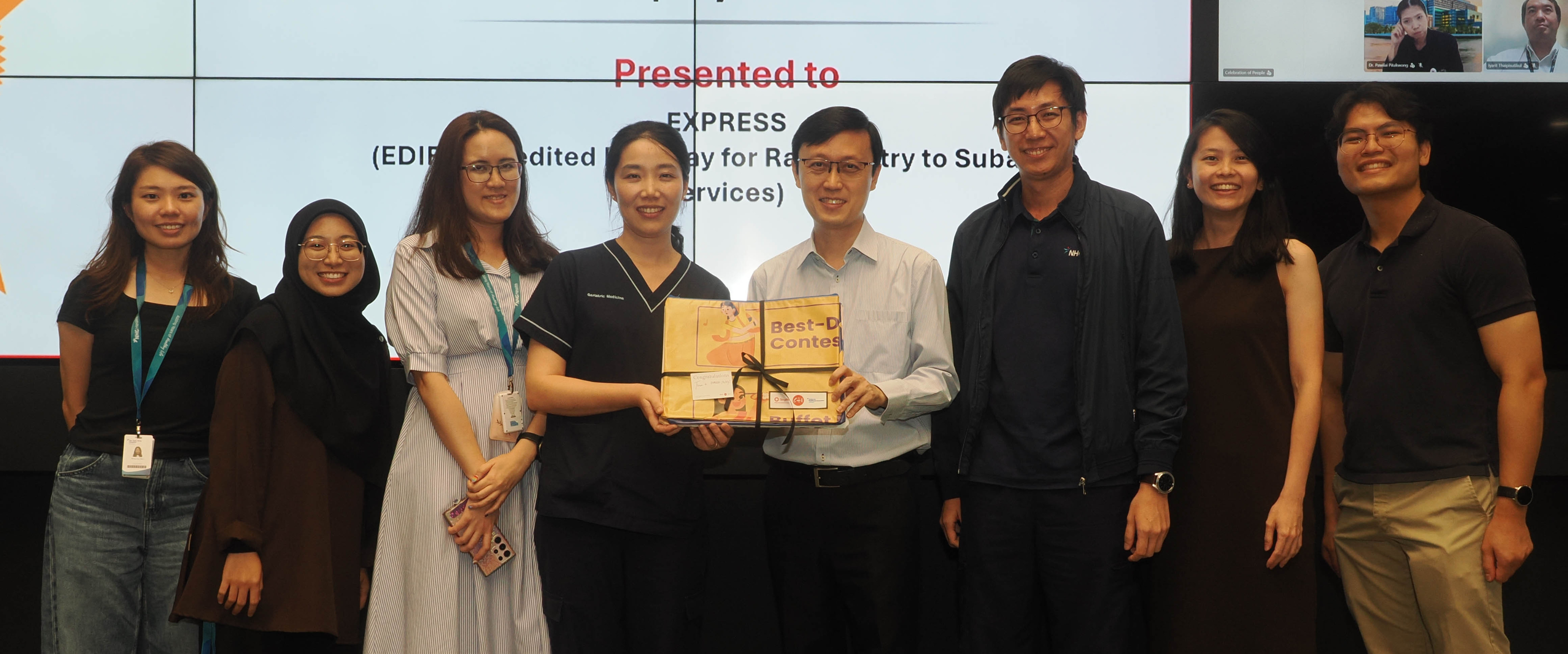
Best-in-Class: EXPRESS – EDIFY Expedited Pathway for Rapid Entry to Subacute Services
EXPRESS enhances the right-siting of care for frail elderly patients by enabling timely and appropriate transitions from the Emergency Department to subacute care settings. By improving access, streamlining workflows, and strengthening care-level matching, the initiative ensures patients receive care in a setting better suited to their needs.
EXPRESS delivers meaningful value by reducing avoidable acute admissions, lowering patient costs and driving system-level efficiencies through optimal use of high-cost acute resources, supporting a more sustainable, patient-centric healthcare model.
The Straits Times article on the project: https://www.straitstimes.com/singapore/health/ttsh-geriatric-triage-team-helps-frail-seniors-avoid-unneeded-hospital-admissions-freeing-up-beds
Runner-up: Imaging Wisely – Evidence-Based Workflow for Magnetic Resonance Cholangiopancreatography to Aid Clinical Decision-Making and Ensure Appropriateness
Imaging Wisely introduces an evidence-based workflow to support more appropriate and timely use of Magnetic Resonance Cholangiopancreatography. The project helps clinical teams prioritise urgent cases, reduce ambiguity in after-hours ordering and improve the use of limited imaging resources, ensuring patients who require urgent imaging can be attended to more effectively.
Runner-up: Reducing Excessive Panel Tests Performed in NHG Yishun Polyclinic
This project addresses unnecessary repeat ordering of chronic disease panel tests by improving staff awareness of recommended testing intervals and introducing system prompts to support more appropriate ordering. The initiative helps reduce avoidable tests and visits while supporting more value-conscious care for patients and the healthcare system.
CHI Health and Social Change Academy
Best-in-Class: Strong Bite, Strong Body – Why Teeth Matter for Preventing Frailty
Strong Bite, Strong Body highlights the important link between oral health and healthy ageing. The project uses a community-based engagement approach to encourage residents who do not regularly visit the dentist to better understand the long-term impact of regular dental attendance on oral health quality of life and frailty risk. Through interactive engagement and follow-up pathways, the project aims to encourage preventive dental care and support healthier ageing.
Runner-up: Increasing Colorectal Cancer Screening Uptake Among Malay Residents in Woodlands by Partnering with Mosque-Based Community Groups
This project seeks to improve colorectal cancer screening uptake through culturally responsive, community-based outreach. By working with mosque-based community groups, healthcare professionals and relatable community role models, the team at NHG Woodlands Polyclinic aims to provide clear information on the Faecal Immunochemical Test, address common concerns and make preventive screening more accessible and understandable for residents.
Runner-up: Communal Dining
Communal Dining supports healthier ageing by equipping seniors with the knowledge, skills and confidence to apply the My Healthy Plate framework and make healthier food choices in their daily lives. Through nutrition talks, experiential learning and senior-led hands-on cooking activities, the programme translates healthy eating principles into practical, everyday meal choices. It also promotes peer learning, social connectedness and community ownership of healthy eating practices.
CHI Sustainability Academy
Best-in-Class: Eye Can Recycle
Eye Can Recycle explores how waste generated from cataract surgery can be reduced, segregated, recycled or upcycled more effectively. By examining the surgical journey from pre-operative to post-operative phases, the project identifies practical opportunities to reduce environmental impact while maintaining care standards. The project reflects how clinical teams can contribute to healthcare sustainability through thoughtful redesign of everyday processes.
Runner-up: Surgical Hand Rub Versus Surgical Hand Wash – Trials to Evaluate Cost, Environmental, Compliance and Uptake Aspects
This project evaluates the feasibility of using surgical hand rub in operating theatres as an alternative to surgical hand wash. Through trials and audits, the team assesses compliance, uptake, cost and environmental considerations, while ensuring patient safety and infection control standards remain central to any proposed change.
Runner-up: PRIME_MedMatch – Matching Donors with Recipients to Reduce Medication Wastage
PRIME_MedMatch explores a structured approach to reducing medication wastage by matching suitable unused medications with patients who may benefit from them, subject to quality checks and appropriate safeguards. The project aims to reduce avoidable waste, support more sustainable use of healthcare resources and explore how circular approaches may be responsibly applied in healthcare. The initiative has already demonstrated tangible impact through reduced medication wastage and cost savings.