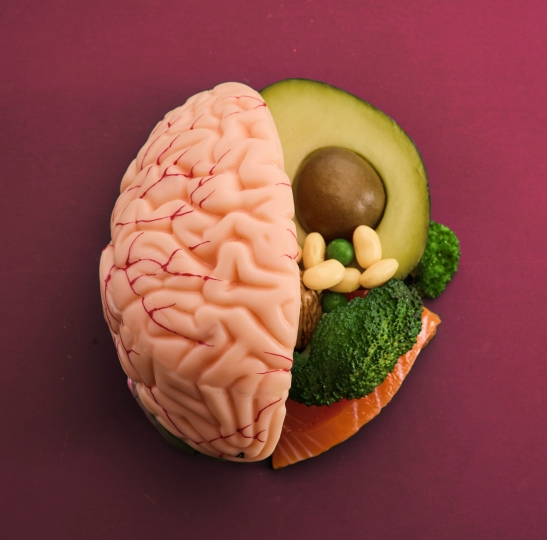


One of the hardest parts about growing older is the fear of losing our memory and focus. In a Singlife survey, 67% of Singaporeans said their biggest worry was becoming a burden to loved ones, while 64% feared losing their independence as they age. This dementia tsunami is coming but it’s not all doom and gloom. While dementia is not entirely preventable, there is strong evidence that shows nutrition plays a clear role in lowering your risk.
Here are four foods highlighted in Upgrade Your Brain by leading nutrition expert Patrick Holford that can help support brain health and keep your mind sharp as you age.
- Oily fish for omega-3 fats
When you think about the fattiest organ in your body, you might assume it’s your stomach, but it’s actually your brain. About 60% of it is made of fat1, and those fatty acids, phospholipids and cholesterol are what build the cell membranes that keep your nerve cells firing properly.
So, it makes sense that the kind of fats you feed your brain affects how well it works. Omega 3 fats keep your brain cells soft and springy, helping them communicate better. Studies have linked higher omega 3 levels to slower brain ageing2.
Holford recommends getting about three servings of oily fish each week such as salmon, mackerel, sardines or anchovies, or taking a good fish oil supplement, a bit like how your parents made you swallow that spoonful of cod liver oil when you were younger.
2. Eggs and leafy greens are packed with B vitamins
These foods are rich in B vitamins (especially B6, B12 and folate), which act like a “brain repair crew,” helping to patch damage and slow shrinkage. These vitamins lower homocysteine, a harmful amino acid that in high levels can harm arteries and raise your risk of blood clots, heart attack and stroke.
In fact, a randomized controlled trial (the VITACOG study) found that B vitamin supplementation reduced the rate of brain shrinkage in older adults with mild cognitive impairment, with those in the treatment group losing about 0.76 % brain volume per year versus 1.08 % in the placebo group3.
Absorption of B vitamins drops with age so be sure to up your intake of eggs, leafy greens like spinach, kale and romaine lettuce or take a B-complex supplement as you grow older.
3. Wholegrains to help regulate your blood sugar
Sugar may taste good but it burns hot and fast, leaving “scorch marks” on your brain. Too much sugar and frequent insulin spikes can damage blood vessels and make your brain less efficient at using energy.
Here in Singapore, the National Neuroscience Institute (NNI) has found that many Asian patients with mild cognitive impairment or dementia also live with chronic conditions like hypertension and diabetes4.
Naturally, cutting down on sweets, white bread and processed snacks will help. But choosing foods with a lower glycaemic index, such as wholegrains, beans, vegetables and lean protein, does even more. These foods release energy slowly, keeping your blood sugar levels steady and your brain fuelled for longer periods. Stable blood sugar helps prevent inflammation and protects blood vessels that supply oxygen and nutrients to your brain, which in turn supports memory and focus.
According to Singapore’s Ministry of Health, a balanced plate should include half a plate of fruit and vegetables, one quarter wholegrains and one quarter protein.
4. Colourful foods that are rich in antioxidants
Turns out colourful foods are not just pretty on your plate but also great at protecting your brain. The pigments that give fruits and vegetables their vibrant colours are packed with antioxidants that neutralise free radicals. These unstable molecules can damage brain cells over time and are also linked to cancer and faster ageing.
Here is a quick guide to what those colours are really doing for you:
A healthier brain for a better life
We spend so much time caring about how we look but rarely stop to think about how well our brains are doing. Between poor diets and the doomscrolling through brain rot and AI slop on our phones, it’s no wonder our minds feel foggy.
Eating better, unplugging from your phone and giving your brain space to recharge can go a long way in keeping dementia at bay. And when you pair those habits with a safety net like Singlife Dementia Cover, you’re not just protecting your health, you’re protecting your future. After all, the real goal is not just to live longer, but to stay present for every moment that matters.
Notes
1. Source: National Library of Medicine, “Essential fatty acids and human brain” accessed on 14 October 2025.
2. Source: Nature, “The Relationship of Omega-3 Fatty Acids with Dementia and Cognitive Decline: Evidence from Prospective Cohort Studies of Supplementation, Dietary Intake, and Blood Markers”, accessed on 14 October 2025.
3. Source: National Library of Medicine, “Homocysteine-lowering by B vitamins slows the rate of accelerated brain atrophy in mild cognitive impairment: a randomized controlled trial”, accessed on 14 October 2025.
4. Source: Ministry of Health, “Speech by Dr Amy Khor, Senior Minister of State for Health, at the 13th International Congress of the Asian Society Against Dementia, held on Thursday 29 August 2019, at the Shangri-La Hotel Singapore”, accessed on 14 October 2025.