


Daniel Sim has long lived with the discipline of someone determined to make each day count. His schedule was always full, carefully structured and purposeful, even during his years as a management consultant in the technology and healthcare industry. In 2018, before he could turn 50 years, he became semi-retired. Today, personal fulfilment takes a very different form. He chooses the projects he takes on and regularly volunteers at a non-profit organisation, teaching leathercraft to stroke survivors.
For Daniel, volunteering is about restoring confidence, forming a community and demonstrating that life after a health challenge can be full of meaning. His motivation is deeply personal: just a year ago, Daniel’s own life came to a near-standstill when he suffered a severe stroke.
Living fully during retirement
After a 30-year career, Daniel’s life was finally devoted to passion projects and hobbies long overshadowed by decades of high-pressure work. While market research and medical-related studies allowed him to learn about conditions like muscular dystrophy and dementia, leathercraft engaged his creative side.
Retirement was meant to be balanced: a chance to nurture his interests, immerse himself in meaningful projects and live at a slower pace. Health concerns were far from his mind. While his former work demands and frequent travel meant he lost sleep, had little exercise, skipped meals and occasionally missed medication, he believed his body could withstand the years of relentless activity. Afterall, he was only in his early 50s, a non-smoker and had never been hospitalised.
“If anything, I thought I’d get a heart attack because of my pace of life, not a stroke,” he reflects.
The day that changed everything
Then one morning in March 2024, Daniel woke up to find his left arm and left leg unresponsive. When he attempted to stand, he fell to the ground, setting off alarm bells. Panic surged as his speech began to slur.
“I couldn’t lift my left arm fully, and my words couldn’t come out properly. I had to get help fast but wasn’t able use my phone, so I called out for my wife,” he recalls.
Shocked to find her husband on the floor, Daniel’s wife immediately called for an ambulance. Within an hour, he was in emergency care. A CT scan confirmed a haemorrhagic stroke. His left-side movement, speech, cognitive function and emotions were affected.
A haemorrhagic stroke is a severe type of stroke where a brain vessel ruptures and bleeds into the surrounding brain tissue, exerting pressure on brain cells and damaging them, leading to loss of brain function. It accounts for around 20% of all strokes in Singapore while ischaemic stroke, where a clot obstructs blood flow to the brain, accounts for the remaining 80%.1 Stroke is the fourth most common cause of death in Singapore1 and a leading cause of long-term care insurance claims2.
A moment of reckoning
The cognitive impact of the stroke was strongest in the initial days that followed. While the mind wanted to move, only the right side of his body responded. “I was worried, lost confidence and frustrated at not being able to do anything,” Daniel recalls.
Surgical intervention wasn’t recommended as it would not yield significant improvements in functional outcomes. But this wasn't the most difficult part – it was the realisation that his physical impairment could be permanent.
“While I knew some of my functions would be affected, I also assumed I’d recover. But reading medical journals confirmed there was no certainty of recovery. Even with minor strokes, there’s no guarantee of a normal life after discharge from hospital, and it’s possible for patients to suffer another one. More serious strokes, like haemorrhagic strokes, often have lifelong impact,” he says.
Questions swirled in his mind. Will I ever see improvement? How long will it be before I regain movement? What will life after discharge look like? Will I still be able to take care of myself, go out and live normally? How will I cope if I can't?
The anxieties extended to his family. He feared for his wife, who would be unable to physically support him as a caregiver due to her small frame, as well as his elderly mother, who tended to worry easily. “I didn’t want to burden them. Realising that I might no longer be independent was the hardest blow of all.”



Fighting to reclaim independence
The weeks that followed were physically and emotionally challenging. Daniel required assistance from the hospital nurses for basic activities like showering, walking and transferring from a bed to chair or standing position. Losing control over his body and personal space was especially difficult.
“Being cleaned up by someone else after using the toilet was humiliating,” he recalls. “While I was determined to not let it happen a second time, the incident also made me think about whether I’d need a domestic helper, something I never considered previously.”
This traumatic memory became a personal motivator to reclaim his independence. Upgrading from a multi-bed ward to a single-bed ward with attached bathroom – which was covered by his medical insurance plan, Daniel took advantage of the in-room privacy and began quietly improvising ways to regain strength in the left side of his body. Making use of a walking frame, hand grips and small weights which he tied to his leg, he pushed himself when no one was looking, discovering incremental strength in his affected limbs.
Adding these self-initiated exercises to the hospital’s daily rehabilitation programme gave him the momentum he needed in those critical early days of recovery. The progress was unmistakable. By the third week, he had mapped a careful route from his bed to the bathroom, balancing safety and mobility.
Not only was he able to go to the toilet unsupervised, he also managed to shower on his own again. “I was mostly able to move by taking little steps. And as I was relying on my right hand for everything, I took half an hour to shower instead of the usual five minutes,” Daniel says.
These small victories in his mobility marked the gradual reclaiming of autonomy. After almost two months in hospital, he was cleared for discharge when he proved to the doctor that he was ready to walk out using only a quad stick. His tremendous progress also meant that he bypassed the usual step-down care, which would have seen him spend another three months rehabilitating at a community hospital. Instead, he just had to continue rehabilitation at an outpatient centre.
Transitioning from hospital to home
While Daniel was eager to return home, his wife worried for his safety and preferred that he remain under hospital care.
“I assured her I had become independent enough by that point; I could support myself and be careful. Furthermore, distances at home were shorter and more manageable compared to the hospital. My bedroom isn’t as big as the private room in the hospital, so moving from the bedroom to the toilet wasn’t an issue,” he explains.
Trauma from his stroke also left his wife hyper-alert, thinking she always had to be on standby in case of another emergency. When she learnt that haemorrhagic strokes are unlikely to recur if the patient’s blood pressure is kept under control with regular medication, she made it her duty to ensure he never missed a dose.
Daniel continued intensive therapy at an outpatient centre, attending twice-daily hour-long sessions, five times a week. Most stroke patients are required to complete three months of rehabilitation, and many families choose to extend therapy for as long as possible, some for a year or more. Therapy not only provides physical benefits for patients but also relieves the burden on caregivers, who get to take a break while patients are at the centre.
Yearning for greater mobility improvement, Daniel continued his self-initiated exercises at home. “I think self-led therapy helped me improve faster,” he says.
Managing the costs of a stroke
Besides intensive physical therapy, financial readiness was a crucial enabler for Daniel's recovery journey. While he and his wife were financially comfortable at the time of his stroke, the S$57,000 bill for two months in a single-bed hospital ward was no small sum. In his case, MediSave and his Integrated Shield Plan reduced out-of-pocket expenses to under S$200. The bill could have been significantly higher had he undergone surgery.
Meanwhile, outpatient rehabilitation sessions, which are not covered by Integrated Shield Plans, can cost S$70 to S$102 per session before subsidies and excluding transport services.3 As Daniel qualified for subsidies under the Agency for Integrated Care (AIC), his bill for 2½ months came up to just S$300.
Without financial planning and support, expenses could quickly become overwhelming for individuals who do not have adequate cashflow. Beyond medical bills, there are potential long-term care costs to factor after a stroke. Daily living costs, domestic helper costs, home modifications and other indirect expenses add up fast, particularly if a survivor cannot return to work. Many stroke patients also face income disruption, with reduced job scope, missed appointments or mobility limitations further affecting earnings. Family caregivers who cut back on work may also face financial setbacks.
Financial strain often compounds the physical and emotional challenges of stroke. However, Daniel’s financial readiness and medical insurance shielded him from this stress, allowing him to devote his energy fully to therapy and rebuilding life.
Reflecting on a 2024 Singlife study that puts the average cost of long-term care at $2,952 per month2, Daniel emphasises the importance of planning beyond immediate medical costs. He says, “Even if someone has that S$2,900 a month for long-term care, they need to consider everyday expenses, which can quickly add up. If you want to live a good life, travel and eat well, you’ll need more than that. Insurance and financial preparedness are not just about covering bills; they provide the freedom to focus on recovery and meaningful engagement.”
From stroke to strength, one stitch at a time
Leathercraft was an unexpected bridge between therapy and purpose. Daniel turned to the art after observing that his hand was taking longer to regain strength compared to his leg. Simple movements like holding an object, gripping a needle and typing with both hands tested his patience.
It was an uphill battle and at times, depressing. For instance, he’d get frustrated when he couldn’t make the holes in a straight line. “I couldn’t hold the tools properly with my left hand. Time and again, they’d slip or fall to the ground, and the lines I tried to draw wouldn’t come out straight. At times, I even had fleeting thoughts of giving up, or worse, chopping off my hand and being completely disabled. But my love for leathercraft kept me going. The thought of losing the ability to do it entirely pulled me back,” he shares.
He challenged himself with stitching and tooling exercises that demanded fine motor control, coordination and concentration. He started with small tasks, slowly progressing to more complex projects. “Somehow, my hands were able to move, perhaps because this is something I like to do,” he says.
Within weeks, the improvement was tangible. He became better at gripping and there was better range of motion in his arm.
Encouraged and inspired to help others regain their confidence, in 2025, Daniel began volunteering at the Singapore National Stroke Association (SNSA), teaching leathercraft to stroke survivors. He adapts the techniques to suit those with limited mobility.
The popularity of his weekly classes demonstrates the impact he has made. Leathercrafting is no longer just his therapy; it has become a conduit for confidence, social conncection and renewed purpose for a bigger circle of people.
Family, community and care
Daniel knows the importance of a strong support system during a major health challenge. His own recovery was anchored in the unwavering support of his family, particularly his wife. Whether it was ensuring that he took his medication daily or encouraging healthier eating habits, this emotional support mattered as much as physical assistance.
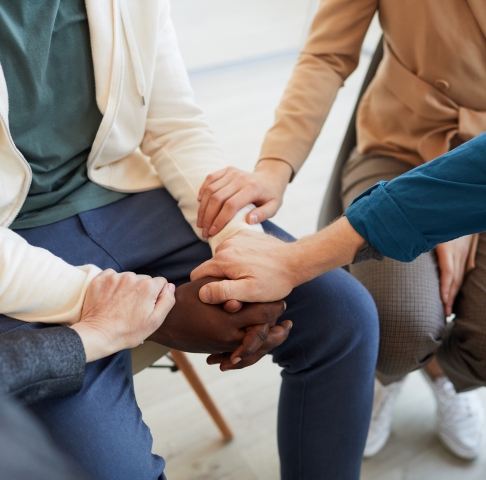
He notes that community support plays an equally vital role in a stroke survivor’s road to recovery. Associations like SNSA, for instance, encourage survivors to step out of isolation by organising outings, games or other social gatherings. Daniel observes that many survivors remain inward-looking, and when this happens, their mobility and morale decline alongside their social engagement.
A helping hand
During a health challenge, having the right support makes all the difference for individuals and their families. Singlife Care Collab is a one-stop health services hub offering Singlife customers convenient access to preventive care, long-term care and other services. Partners under this initiative include the Singapore National Stroke Association and Agency for Integrated Care.
Lessons learnt and advice
Today, Daniel has regained 75% of his mobility and much of his hand function, although he uses a walking stick for safety. Leathercraft is no longer just a hobby but a lifeline that connects him to his past and shapes his purpose in the present.
His lifestyle has also transformed. No longer travelling extensively, he focuses on maintaining health. Blood pressure, diet and exercise are now deliberate choices, a conscious effort to prolong independence and quality of life. “I’ve lost 25 kilograms, I’m rebuilding muscle and I feel good,” he shares.
At the same time, every step and every movement is a reminder of life's fragility. Reflecting on his journey, Daniel urges planning and preparation for unknowns in life. Unexpected health events can occur at any age, and readiness allows survivors to navigate life with dignity and choice. Insurance isn’t just for medical coverage but for peace of mind and life continuity. “With people living longer, it makes sense to have separate coverage for health and wealth needs. Many people lump the two together when, in fact, they work differently and have different purposes,” he says.
He also shares a health caution drawn from experience: “If I could turn back the clock 10 years earlier, I’d lead a less stressful life. Sleep for just three hours a day for 20 years and something bad is going to happen.”
And should the unforeseen happen, Daniel, who regularly gives stroke awareness talks, emphasises purpose and community as crucial aspects of recovery. Physical independence is vital, but engagement and purpose sustain the spirit. “Some stroke survivors are able to go back to work and doing what they want to do, like me. But there are many who cannot. So, through my classes at SNSA, I hope we can create a community of stroke survivors who encourage one another,” he reflects.
The message is clear: financial planning, resilience and care are vital for a meaningful life after a health challenge. Proper long-term care planning gives individuals and their families crucial support to carry on during life’s biggest challenges.
Notes
1. Source: The Straits Times, “More stroke cases in S’pore in 2018: How do I prevent stroke and what should I look out for?”, published on 12 October 2020.
2. Source: Singlife, “Securing long-term care for a super-aged society”, published on 25 July 2025.
3. Source: Agency for Integrated Care, “Community Rehabilitation Centre”, accessed on 27 September 2025.